

 Back
Back

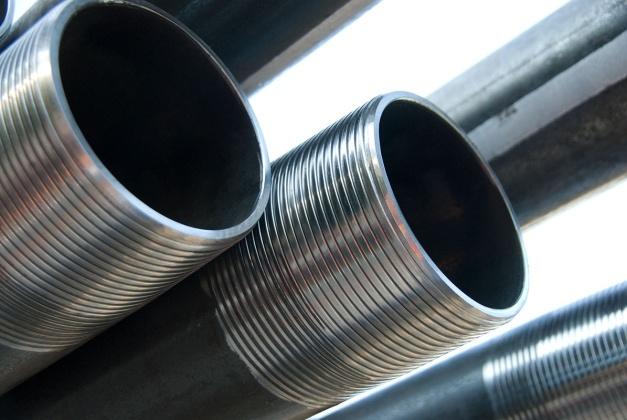
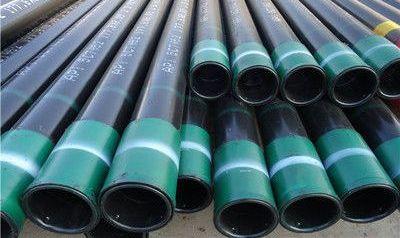
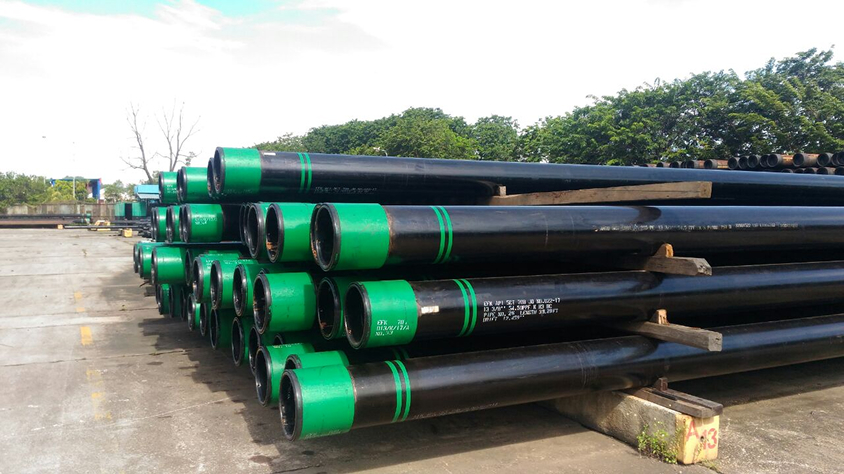
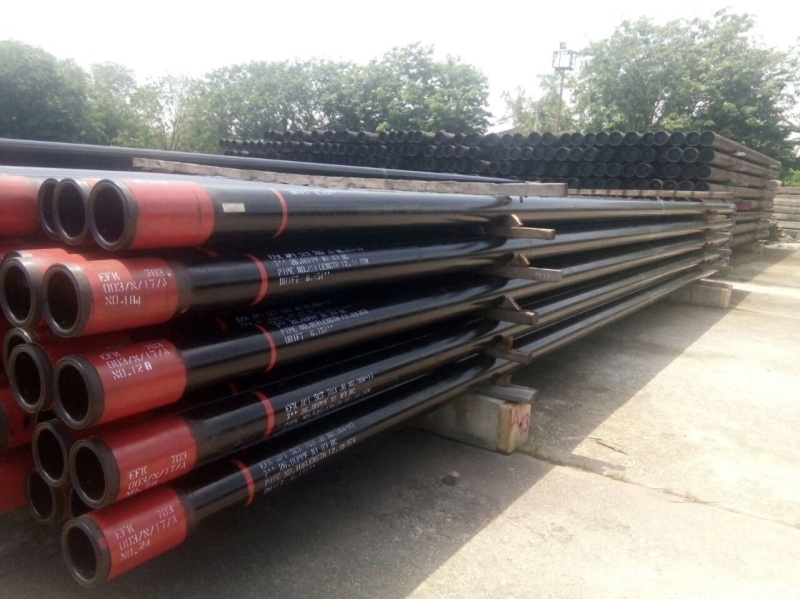
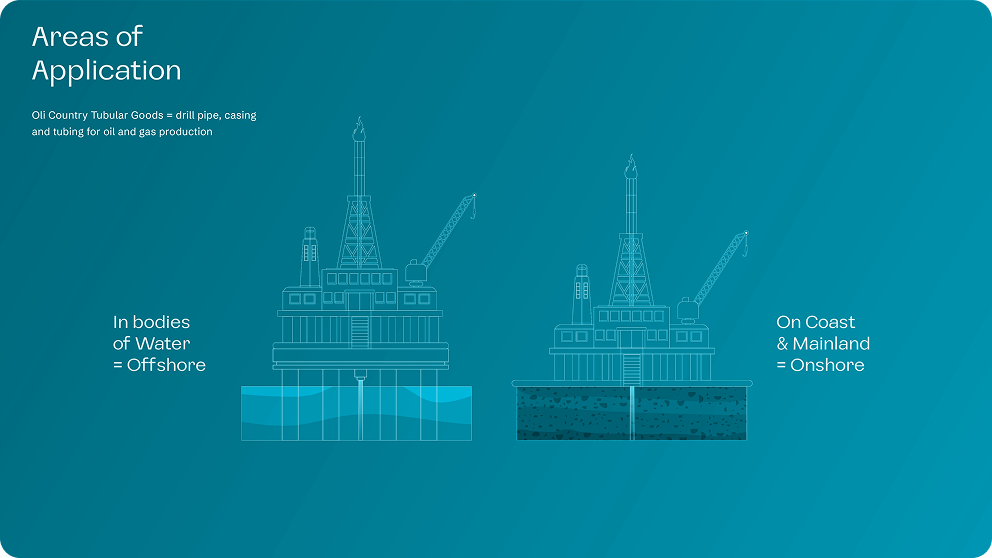
Oil Country Tubular Goods (OCTG) is a type of seamless pipe used as oil, natural gas, and geothermal wells according to the API (American Petroleum Institute) standard. The American Petroleum Institute (API) stipulates precisely standardized specifications that define the properties of Oil Country Tubular Goods and classify them into ten grades. These properties are achieved through the chemical composition of the steel and subsequent heat treatment.
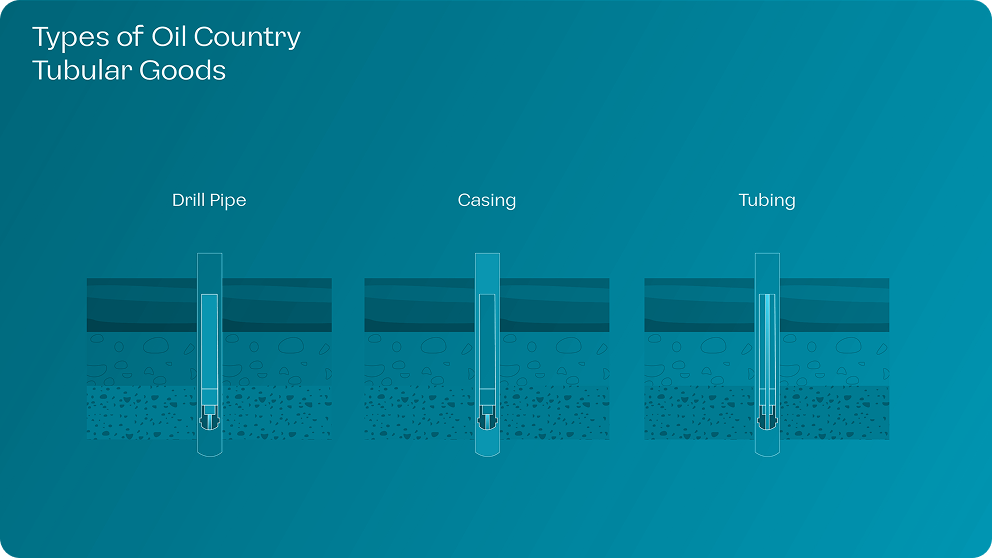
A. OCTG Function:
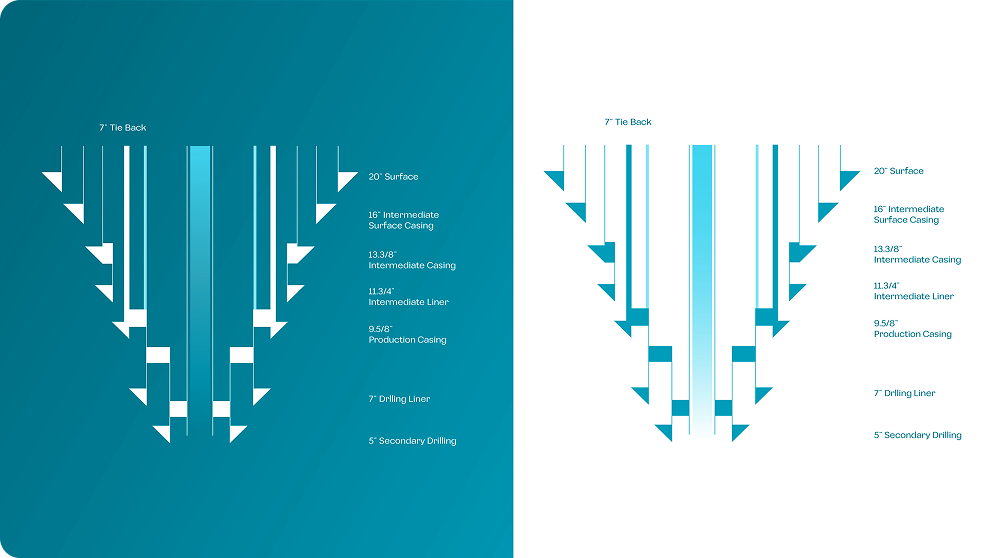
1. Surface Casing : Surface casing is set to provide blowout protection, isolate water sands, and prevent lost circulation. It also often provides adequate shoe strength to drill into high-pressure transition zones. In deviated wells, the surface casing may cover the build section to prevent key-seating of the formation during deeper drilling. This string is typically cemented to the surface or to the mud-line in offshore wells.
2. Intermediate Casing : The casing which is generally set in place before production casing and after surface casing to provide protection against the abnormally pressured or weak formations. The casing enables the use of drilling fluids with different density crucial for controlling the lower formations. It is generally set in transition zone from the normal pressure to the abnormal pressure. It is often considered as the longest section of the casing present in a well. Most of the wells are drilled with running an Intermediate Casing. The Intermediate Casing is essential on longer drilling intervals where the essential weight of the drilling mud used to prevent well blowouts that can result in hydrostatic pressure which can fracture deeper or shallower formations. This casing placement is preferred to make the hydrostatic pressure of the drilling fluids to remain at a pressure level between the fracture pressure and formation pore pressure. They are set when the borehole conditions or the geological characteristics need isolation. The conditions include, but are not limited to, formation fluid influx, hole instability and prevention of the lost control. It is possible to run multiple Intermediate Casings in a single well.
3. Liner : A casing string that does not extend to the top of the wellbore, but instead is anchored or suspended from inside the bottom of the previous casing string. There is no difference between the casing joints themselves. The advantage to the well designer of a liner is a substantial savings in steel and therefore capital costs. To save casing, however, additional tools and risk are involved. The well designer must trade off the additional tools, complexities and risks against the potential capital savings when deciding whether to design for a liner or a casing string that goes all the way to the top of the well (a “long string”). The liner can be fitted with special components so that it can be connected to the surface at a later time if required.
4. Production Casing : When the production zones in a gas or oil reservoirs need to be isolated, the Production Casing is used. Whenever there is an event of tubing leak, the pressure generated by hydrocarbon formations is withheld by the Production Casing. Some of the other reasons for which the Production Casing is installed are to support the casing when injection pressure is exerted from fracture jobs, for gas lift and down casing operations, to support the Injection of chemicals to increase the production rate, and to provide a conduit from the petroleum producing formation right up to the surface.
5. Tie-back : Liner tieback string is a casing string that provides additional pressure integrity from the liner top to the wellhead. An intermediate tieback is used to isolate a casing string that cannot withstand possible pressure loads if drilling is continued (usually because of excessive wear or higher than anticipated pressures). Similarly, a production tieback isolates an intermediate string from production loads. Tiebacks can be un-cemented or partially cemented.
6. Tubing : Tubing is the conduit through which oil and gas are brought from the producing formations to the field surface facilities for processing. Tubing must be adequately strong to resist loads and deformations associated with production and work-over. Further, tubing must be sized to support the expected rates of production of oil and gas. Clearly, tubing that is too small restricts production and subsequent economic performance of the well. Tubing that is too large, however, may have an economic impact beyond the cost of the tubing string itself, because the tubing size will influence the overall casing design of the well.